Showing posts with label on being Pakistani American. Show all posts

Monday, August 4, 2014

Eid with kids.

Many of us here reminisce about Eid back in Pakistan. All the things that made it special,the festive air of Ramadan, the Eid shopping, the holidays, the excitement around Chaand Raat1 and the Mehndi2 sessions. I remember going to our Nana Nani’s (mom’s parents) place in Lahore or them coming a few days before Eid. I remember waking up every Eid morning and checking my Mehndi first thing to see how much the color had darkened over the night. I remember our typical Eids, from the Eid Milan3 parties that were routine during our time in the PAF bases, the visits to and from my dad's friends, family and the people he worked with. And every Eid day at some point, I remember us complaining about how boring our day was and how we did not want to meet all those people. Thinking back, it feels like that was such a golden time of our lives, when we were together, enjoying the random little things that made Eid exciting in Pakistan. Except for one Eid ul Azha spent with my in-laws 5 years ago, the last Eid I spent with my family back in Pakistan was in 2005!

It's true that you take some things for granted when you live in Pakistan or even in a Muslim country. Our parents probably did not have worry about whether Eid was special for us or not. It just automatically was that. For us living away from our family, and that too in a non-Muslim country, we have to come up with ideas to make it a special occasion for our families and particularly our kids. With no reminders around them about Eid unlike holidays like Christmas, we try to come up with our own little ways to get the kids excited about Eid.

This year since Anya is older, she was able to understand the concept a bit more so I tried to introduce her to Eid in little ways. Towards the end of Ramadan I involved her in buying the Eid cards, and in writing and mailing them. She helped me choose accessories for her Eid clothes and I would lay out her clothes and show her her outfits. She helped me pack gifts for her friends. I also made it a point to involve her in setting up the decorations for our Eid party. When Eid finally came Anya was super excited and it was amazing watching her enjoy the day and the celebrations. For a week after she kept talking about Eid gifts and her Eid shoes and clothes and became an expert at wishing Eid Mubarak4.  

I hope and pray for a time when Eid might become a well-known holiday. When we get to see Eid displays and shopping deals as Ramadan nears its end. So its easier for our kids to belong and feel even more a part of their own homeland. Until then we will keep doing our little efforts to make Eid a time of excitement and celebration for our kids.
Untitled picture

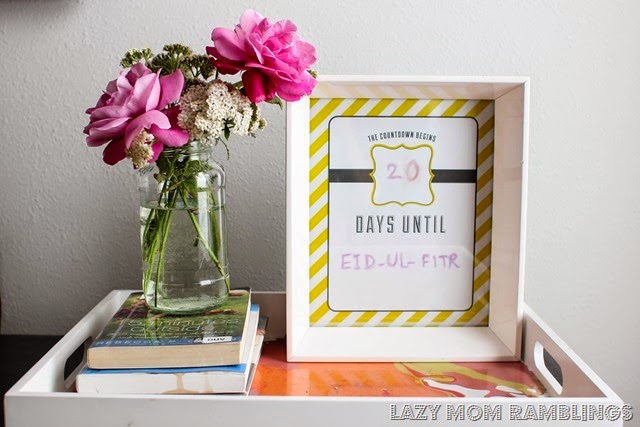
A great idea for an advent calendar that can be reused for multiple occasions via here

Untitled picture2

Hanging out with her daddy as we made inserts for our Eid Mubarak cards in Urdu.

Untitled picture3Untitled picture4

I’m trying to go back to greeting cards so sending out Eid Cards two weeks into Ramadan will hopefully becoming a tradition to continue.
20140727-IMG_689920140727-IMG_6906

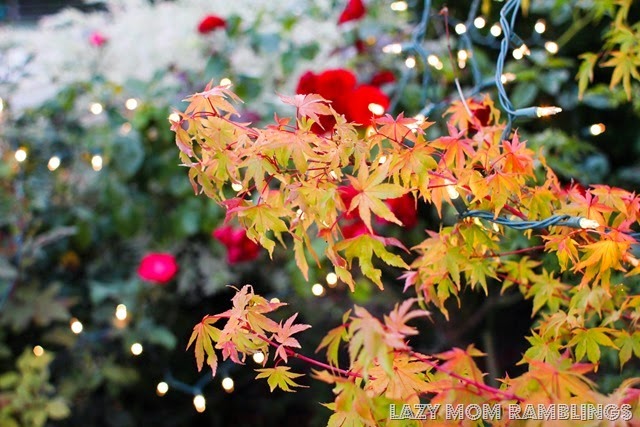
Chaand Raat Iftari at my friend’s house. Love how they decorate their front yard with lights every Eid.
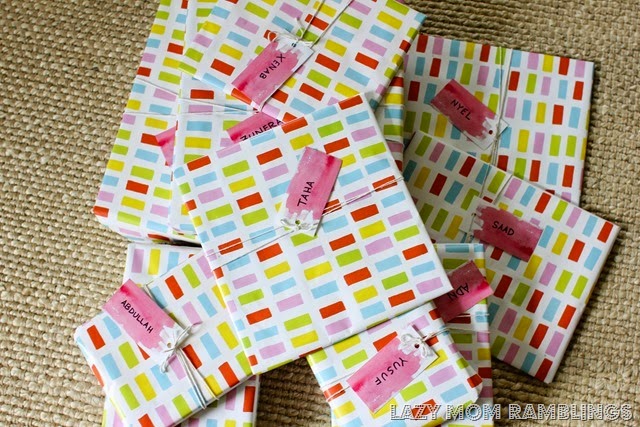
Untitled picture5Watercolor gift tags freebie via Swooned Magazine.

20140729-IMG_712920140728-IMG_6961Gorgeous Eid Mubarak gift tags freebie via Olive and Lavendar

The gifts for Anya’s friends, Anya’s gift from us and her Chand Raat/Eid outfits all ready for the big day.

20140727-IMG_6884


Helping me with our Eid party decorations. More pictures from that for a later post :)

20140728-IMG_6991

And my favorite part about American Eids, the prayers at the mosque.

How do you get your kids excited about Eid? Would love to hear.

Thanks for reading


FYI

1 Chaand Raat is the night before Eid ul Fitr. It is known as Chaand Raat literally Night of the Moon, because the new moon signifies the ending of Ramadan and hence Eid the next day. In most Muslim countries it is a night of celebration and joy spent preparing for Eid the next day in different ways.

2 Mehndi, more famously known as henna is a natural dye used to decorate hands in intricate patterns and is usually done in Pakistan for occasions like weddings and Eids.  

3 Eid Milan were Eid parties for families with lots of food and family/kids activities.

4 Eid Mubarak is the tradition way to wish each other a happy Eid. Literally it means Blessed Eid.

Friday, February 28, 2014

On trying to raise a bilingual kid (and some Urdu specific links). Part 2

20140225-20140225-IMG_9296

I shared some thoughts on encouraging your kid to learn and speak a second language earlier and this post is a continuation of that one. I believe that it is our job as parents to make the second language seem fun and exciting for our kids and that can be done through age appropriate material for them. It is a little hard sometimes to find time and resources for this but totally worth it in the end. And I also feel that to encourage our kids to be comfortable speaking Urdu, we ourselves have to own the language. Today, I wanted to share some Urdu specific resources that I particularly like. Hope these will help:)

If you haven’t already, read Part 1 here.

TV

ToffeeTV

- ToffeeTV is great resource for stories,songs and poems. The beautiful hand-drawn illustrations are adorable and the slow-paced images make them perfect for younger kids. For older kids they also feature stories, activities etc. They also have apps for Apple and Android gadgets which is a huge plus. One of Anya’s earliest favorites was Baadal Garje by them.

download

- Sim Sim Hamara is the Urdu version of Sesame Street and I absolutely adore this series. Kids love Elmo so they will be attracted to this. The songs are so catchy and even I don’t mind listening to them over and over again.  Each episode focuses on a word which is explained in different ways. I was heartbroken that the series was discontinued. But thanks to YouTube, one is still able to enjoy the series. Some favorite songs are Meesha Shafi singing Ghar and Strings singing Hum but pretty much all of them are awesome.

ankahi2406651_164169963691866_117511955024334_258460_240387232_n

- Once your kids are a little older, classic plays like Tanhaiyan, Ankahi and many others are also beautiful to watch as a family.

Music/Audio

Nazia_Zoheb[4]

- You don’t have to stick to material aimed at children only. Anya loves a song that played on Coke Studio called Koi Labda (it is actually in Punjabi) and she will make me play it over and over again in the car. Some older songs specially those by Nazia and Zohaib Hassan are so catchy and I know a friend’s girls’ loved listening to them. I just try to make sure that the lyrics are kid-friendly, in other words steer clear of those popular Bollywood songs, :p

- Sohail Rana's songs are all on YouTube and I recently started putting them on in the evening while I cook and she colors or is busy with another activity. Anya just recently picked up Dosti aisa naata from it. I don’t know about others but my sister and I grew up listening to these songs thanks to my mom, and they have a big nostalgia value for me.

- I love humming songs in Urdu to Anya at bedtimes. If you’d be interested, Nindiya re by Kavish , and Soja Re by Uzair Jaswal make for perfect lullabies. 

- Some classic songs from old Indian movies are adorable and I have another playlist for Anya on YouTube of those, including lakri kee kaathi, rona kabhi nahi rona, chal mere ghore etc.

- Kassette Kahani is also available online if your kids would be interested in it. Anya is still too young for this, but this favorite of many from our generation that grew up in Pakistan might be interesting to older kids.

Books

20140225-20140225-IMG_9303

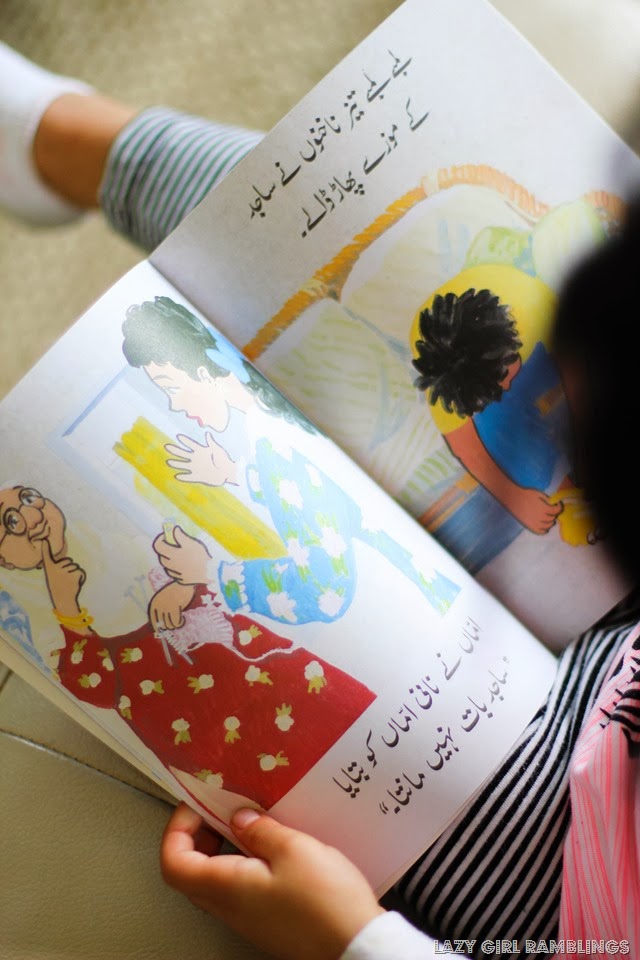
- On my recent visit, a relative told me about Oxford University Press and that they have a great collection of Urdu books. I was pleasantly surprised at the adorable little books we found. The illustrations as well as the stories are just so loveable (you can see a glimpse in this picture above). Even their Urdu qaidas are the best I have seen around. Oxford University Press has stores in many cities across Pakistan and you can find one close to you here.

- Another current favorite that was gifted to us, is a Beaconhouse School System Readers series of short simple story books. Anya loves 'Na gudda na gurya' from this series.

- BookGroup also has great little Urdu books with original stories. Their sets of books for different age groups can be bought online too. I have a few of their books but plan to order another set or two soon.

- I discovered this adorable board book on Amazon which would be awesome for brand new readers, Bulbul Ka Bacha, based on a popular Urdu poem.

- Biloongra is another exciting bilingual series I came across while writing this post. The stories and illustrations are adorable and you can read excerpts to your kids here. They are available in Karachi or you can email them for the PDFs. 

20140225-20140225-IMG_9299

Because Anya is still young, we have only focused on the speaking part. I am trying to introduce her to the Urdu alphabets and I know my husband would love for her to be able to read and write Urdu. Because the alphabets and reading are similar to the Arabic for Quran that she will learn iA, I hope that that part wont be that hard if we decide to do that.

If you have any other interesting Urdu specific resources to share, I would love to hear about them in the comments below.

Thanks and much love.

Monday, February 24, 2014

On trying to raise a bilingual kid. Part 1

Many around me have commented on Anya's Urdu (our native language from Pakistan) and I wanted to share my thoughts on raising a bilingual child. We are still in the beginning of this journey but I hope that she continues to learn Urdu alongside English. And for that will continue to find ways to encourage her. This post is a collection of ideas that we have tried to incorporate.

131211105

Even before Anya was born, my husband and I knew that we wanted Anya to be comfortable in understanding and also speaking Urdu. I think I didn't really value our first language till I got married and moved away from Pakistan. Most of urban Pakistan speaks a mix of Urdu and English and English is pretty much the language in school and offices. As a result Urdu seems to lose its importance. Only when I married my husband (Almost all of his immediate family speaks and writes beautiful Urdu) and moved away from Pakistan, did I start to value it and realize how a language contains in itself the essence of a culture.

Growing up in Pakistan you take it for granted but when raising kids abroad you realize how easily kids can get disconnected from their parents language and in extension, their parents/grandparents culture and even their extended family (many grandparents are not as comfortable in English as in their mother language) etc. Because Anya is always going to be connected to Pakistan because of us and her extended family, it is important for us that she understands and speaks the language. I was also inspired by the many families around us whose kids speak beautiful Urdu alongside their American English. And besides all of it, it is a great skill, to know more than one language and our kids are lucky to be growing up in multilingual households. Only when we consider this an advantage and focus on it will we be able to pass on this gift to our kids.

Here are some things I am trying to do to encourage her to learn our native tongue alongside English.

 131211104

- If you are passionate about keeping your kids connected to your native language, I would recommend reading these two books. The Bilingual Edge and The Bilingual Family are both really useful resources for bilingual families. Both these books address important topics like understanding early language learning, age appropriate tips for teaching a second language, and also addresses common misconceptions that discourage parents (like not wanting to ‘confuse kids’ with two languages, which apparently is a myth).

- Ever since she was a baby, we tried to talk to Anya mostly in Urdu so it was the first language she heard. And as she started speaking words, we tried to teach her Urdu words for as many things as possible. I knew that she would eventually learn English whether we focused on that or not but she would have a hard time learning Urdu at a later stage. Babies and young toddlers listen so intently and if they're exposed to a language from the start, I think it helps a lot. This does not mean that we avoided all English, we just tried to expose her to Urdu as much as English I'd say. I am so glad I did that because I'd say around 2.5 years even though she doesn't go to preschool, just through cartoons and noticing that English is the main language of interaction outside the house, she started switching to mostly English. I usually encourage her to say the same thing in Urdu by repeating it for her. Right now she knows the Urdu and English words for most items and I don’t see her getting confused because of that at all.

- Songs/Stories/Music. Young kids learn best through music so you can start playing poems and songs in the language from an early age. Thanks to the universality of YouTube, these are more and more accessible now. I have a playlist with poems/songs in Urdu that she enjoys and play them for her at random times. Most popular poems have translations in local languages and kids will particularly enjoy them. At bedtimes sometimes I hum my favorite Urdu songs for her as well as some lullabies in Urdu that my mom used to sing to us. You can also tell stories in the second language, and even make your own. Include their favorite characters and friends names to capture interest. The aim is to make the language fun for them so they will pick up the words easily.

- Many families suggest making a family rule that everyone speaks the native language at home. And as Anya grows and starts school, I think we will move towards that too with Urdu becoming our main home language.

- Hanging out with people that speak the same language can give kids the feeling of community and helps them use the language with people outside their family. We are so lucky to have Urdu-speaking friends and because we meet with them on a regular basis, the kids get to see us interacting in Urdu. We also Skype with family in Pakistan who interact with her in Urdu and I specially noticed a push in her Urdu after our trip to Pakistan when she was a little short of 2. America is so multicultural and more often than not you will find at least some people that speak the same language as you and meeting with such families from time to time can help your kids too. Even attending concerts/plays or any events where that language will be spoken will also help.

- TV. Look for TV programs for kids in the language. I found two resources (more on that later) that I really liked and introduced to Anya from the time that she was a year old. They’re two of her favorite things to watch now. Many times she will say a word she has picked up and take me by surprise. Other than making them familiar with the language, watching these shows will also help them connect with and later on understand the culture of their parents. Even programs not necessarily targeted for kids but family friendly enough to watch with kids around can be helpful. I watch a lot of Pakistani dramas and look forward to the day when my daughter is old enough to watch some of them with me. A family friend enjoys watching them with her 19 year old daughter and it has been great for her Urdu while at the same time reconnects her to the culture of her parents and understands some of the things better.

- Books. Kids enjoy books and I think it would help immensely if you’re able to find attractive books in the language that they enjoy as much as the English ones. Anya loves her books so I have been on the lookout for books in Urdu from the beginning. I have to admit, it has been hard finding quality Urdu books and some of the best we have today have been passed on by her cousins or gifted from sweet people. We do have a growing little collection by now though and quite enjoy reading them over and over again.

20140219-IMG_9187

Check back later for another post with some Urdu specific resources.

Thanks so much for reading and much love. If you are raising a bilingual kid and have some tips to share, I would to hear them in the comments :)